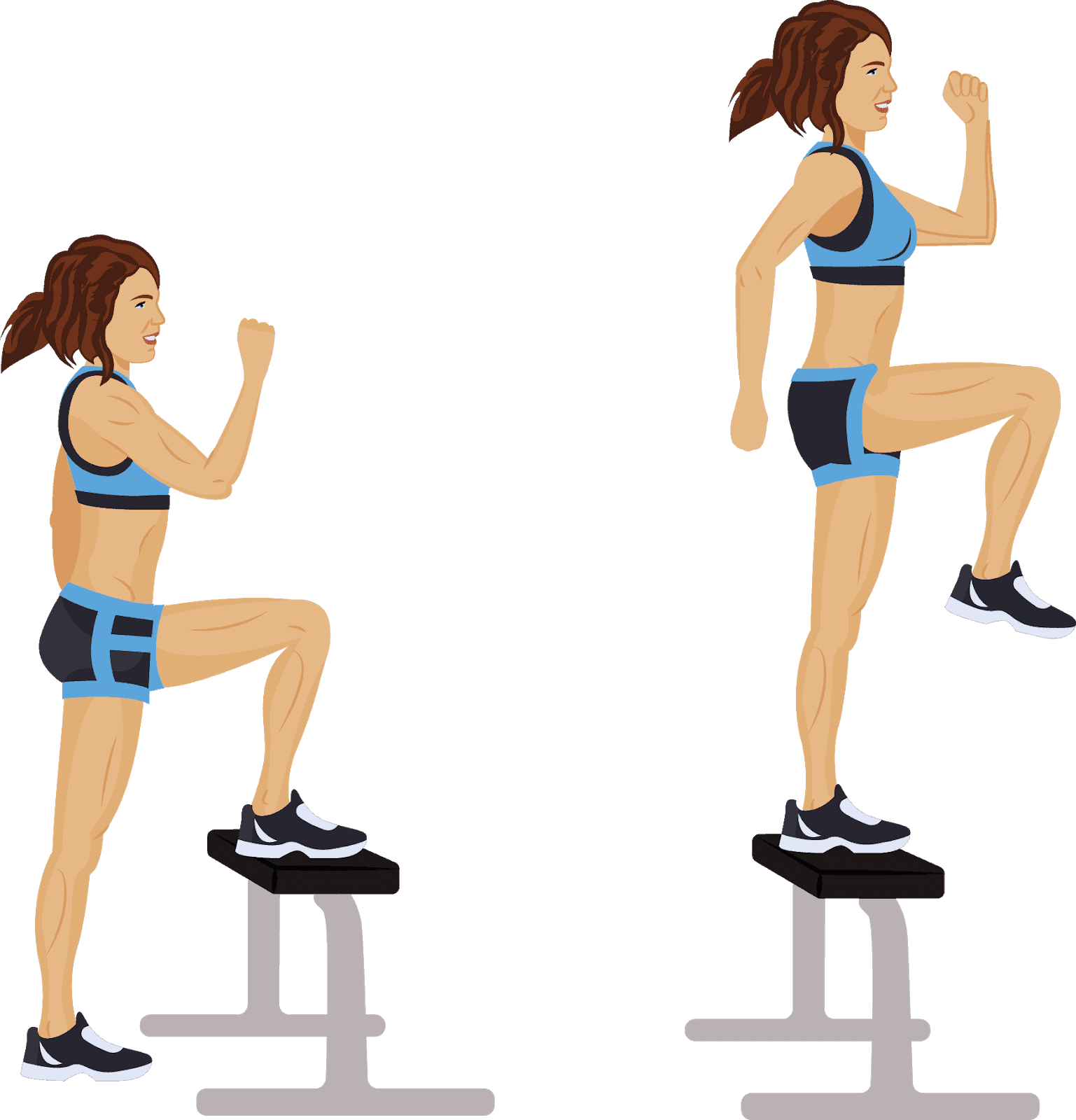
 Knee injuries are a common problem for the non-sportsperson and sportsperson alike but can be prevented by maintaining correct form when lifting and carrying out daily tasks or athletic exercises and ensuring strong musculature through the legs and core.
I believe that the advice given below is sound for prevention of all types of knee injury prevention programmes and even rehabilitation after injury. Of course everything below is just some examples and you should seek professional advice to tailor it specifically to your needs!
Further into this article we will be focusing on the anterior cruciate ligament (acl) injury of the knee as it is most commonly injured in sports where participants land from a jump, suddenly stop, change directions or pivot in sports like football, basketball, hockey, rugby, or skiing. (Brukner and Kahn, 2012).
So where do you start?

Strength Training
 It is important to strengthen the muscles surrounding the knee such as the quadriceps, hamstrings and calves as well as important functional muscles like the core stabilisers and
glutes.
I tend to start people off with isometic (static) or small range muscle activation exercises focused around the simple squat and lunge and calf raise and lower for around the knee joint. For the core and glutes we can go right back to basics with pelvic tilts, bridges and clams before progressing to more commonly known plank variations or stability ball exercises.
Practising Proper Stepping, Jumping, Landing and Multi-directional Movement Technique
 This should be specific to the lifestyle and sport that the person undertakes.
As with the strength training exercises; movements should be executed with the correct biomechanics. When landing, the knee should follow the toes, ideally remaining in a straight line above the middle toe or slightly pointed outwards towards the little toe. The knees should never travel inwards towards each other as this puts stress through the ACL (valgus stress). The athlete should have a slight bend in the knee’s and the hips when landing and try to land in a controlled manner with more weight placed through the forefoot rather than the heel (Voskanian, 2013).
Plyometric training
 Plyometric training involves high intensity agility drills which work to improve footwork by developing power and speed. This can involve agility drills like quick sprints, stops and starts, cutting, lateral movements and jumping, ladder drills or even dance mat work. These activities should mimic the quick motor responses that an athlete would perform in a game situation (Voskanian, 2013).
When Should I Start And How Often Do I Need To Perform The Exercises?
For general conditioning a 15-30 minute training session between 1 (minimum) and 3 (optimal) times a week is effective.
For the athlete Voskanian 2013 as found that an ACL prevention program would be most effective in preventing injury if it is initiated 6 weeks prior to engaging in high-intensity sporting activity. Sessions should be 3 times a week and the program should be completed through the competitive season and can be used as a warm up prior to engaging in sporting activity.
As a Coach...Where Can I Find ACL Prevention Programmes?
The FIFA 11+ injury prevention program already has a proven track record in reducing knee injuries in youth and adult footballers. You can find the whole programme here